

Your AC ran fine last August, so it will run fine this June, right? That’s exactly what 4 out of 5 homeowners tell themselves right before the hottest week of the year. Then the compressor dies on a 104 degree afternoon and the repair bill lands like a second mortgage. Here’s the truth: air conditioners rarely fail without warning. They send signals for weeks, sometimes months. Most people just don’t know what to look for. This guide walks you through the seven clearest signs that your system is begging for a tune-up, plus what a professional checkup actually costs and why skipping it is the most expensive decision you can make.
Why Does a Tune-Up Matter So Much?
Think of your AC like your car. You wouldn’t drive 10,000 miles without an oil change, but somehow we let air conditioners run an entire punishing summer with zero maintenance. The math is brutal. The U.S. Department of Energy reports that a poorly maintained air conditioner can use up to 15% more energy than a well-tuned one, and that number climbs higher when filters stay dirty for months on end. That single statistic published by Energy.gov translates into real cash. On a typical New Mexico summer electric bill, 15% waste is roughly 40 to 60 bucks a month. Over four hot months, you’ve paid for the tune-up already.
And it’s not just about money. A neglected system pushes way harder than it should, cycling on and off constantly. That wear and tear shaves years off the equipment’s lifespan. A unit that could have served you for 15 seasons starts wheezing at year nine or ten.
Here’s the part most people miss: an air conditioner that runs inefficiently doesn’t just cost more. It also fails to dehumidify properly. That’s why your house feels sticky even when the thermostat reads 72. The system is moving air, but it’s not pulling moisture out the way it should.
Sign 1: Your Electric Bill Spiked for No Reason
You didn’t change your habits. The family didn’t start keeping the house at 68. Yet your July bill jumped 30% over last year. That’s not a mystery. That’s your AC telling you it’s working twice as hard to move the same amount of cool air.
A sudden, unexplained spike in energy use almost always traces back to one of three culprits: a dirty condenser coil, a refrigerant charge that’s drifted out of spec, or a blower motor that’s losing efficiency. All three are exactly what a tune-up catches. The fix is usually inexpensive. Ignoring it means paying the inflated bill every single month until someone finally looks under the hood.
Sign 2: The Air Coming Out Isn’t Cold Anymore
Stand at a supply vent with the system running. Put your hand in the airflow. It should feel noticeably colder than the room air, somewhere in the 15 to 20 degree range below the return temperature. If the air feels merely “room temperature with a breeze,” you have a problem.
Weak cooling can mean several things. A failing capacitor makes the compressor struggle. Low refrigerant kills the heat exchange process. A clogged evaporator coil blocks airflow entirely. The common thread is that each one gets worse the longer you wait. What starts as lukewarm air in May becomes a full system failure in July, always on the hottest day of the year.
Sign 3: Strange Noises Coming From the Unit
A healthy air conditioner hums. Period. The moment you hear clicking, grinding, hissing, or squealing, something inside is failing.
Each sound points to a different mechanical issue. Grinding usually means the compressor bearings are shot. Clicking at startup suggests an electrical problem with the contactor. Hissing is often refrigerant escaping. And that high-pitched squeal on startup? That’s the fan belt, and it’s about to snap. The EPA’s refrigerant management guidelines make clear that a hissing system is actively leaking chemicals that hurt both your comfort and the ozone layer, so that noise deserves attention faster than the others.
If any of these sounds greet you, shut the system off. Running it while making grinding noises is the fastest way to convert a 200 dollar repair into a 3,000 dollar replacement.
Sign 4: It’s Running Constantly, Never Cycling Off
On a 90 degree day, a properly sized AC runs in cycles. It cools the house, shuts off for a while, then kicks back on. That’s how it’s designed. What’s not normal is a unit that runs 24 hours a day and still can’t keep up.
Constant running points to oversized expectations, but more often it means the system has lost capacity. Refrigerant leaks, dirty coils, and failing motors all reduce how much heat the unit can move per hour. So it runs longer and longer to achieve the same result, until eventually it just runs forever.
Here’s a quick test you can do at home: set the thermostat 5 degrees below the current room temperature and time how long the system takes to reach it. If it takes over an hour on a normal day, you’ve got a system that’s lost its punch.
Sign 5: Your Home Has Hot and Cold Spots
You know that one room that’s always freezing while the bedroom upstairs feels like a sauna? Temperature stratification is normal to a degree, but dramatic swings between rooms indicate airflow problems and duct issues. A tune-up includes inspecting the blower, checking the ductwork for leaks, and verifying that dampers are positioned correctly.
Uneven cooling also wrecks your comfort in a subtler way. You crank the thermostat down to cool the hot room, which makes the cold room absolutely frigid, which means you’re running the system harder than necessary. That’s the 15% energy waste from Sign 1 showing up in your daily life.
What Actually Happens in a Professional Tune-Up?
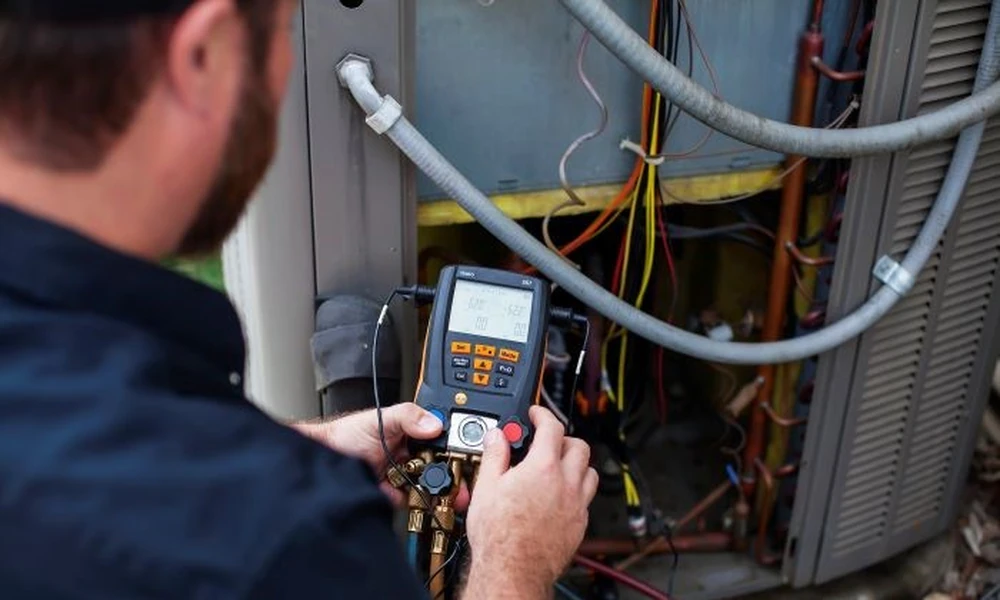
If you’ve never watched a technician work, here’s the honest breakdown. A complete tune-up runs 45 minutes to an hour and covers a specific checklist. A technician will check the refrigerant charge and add some if it’s low. They’ll clean the condenser coils and evaporator coils. They’ll lubricate the motors, test the capacitor, and verify the thermostat calibration. They’ll inspect the blower motor, check the condensate drain line for clogs, and measure the temperature drop across the system.
The ASHRAE research on HVAC efficiency has shown for years that preventative maintenance catches the majority of system failures before they actually happen. That’s the entire point. The technician finds the worn capacitor in March, replaces it for 80 bucks, and you never spend a single uncomfortable night in July.
Scheduling that inspection early matters too. The best time to book AC maintenance is late spring, before the heat wave hits. That’s when technicians have open schedules and parts are in stock. Wait until June and you’re competing with every homeowner in the city for the same appointment slots.
The Real Cost of Skipping Maintenance
Let’s talk dollars, because that’s what actually motivates people. A professional tune-up costs anywhere from 80 to 150 dollars depending on your market. An emergency repair call in the middle of summer runs 200 to 400 dollars just for the visit, before any parts or labor. A compressor replacement runs 1,500 to 2,500. A complete system replacement? You’re looking at 5,000 to 10,000 dollars installed.
So the math is simple. A 120 dollar tune-up that catches one failing capacitor saves you the 2,000 dollar compressor replacement it would have caused. That’s a 1,600% return on investment for a single hour of labor. I don’t know any other purchase in your house that pays that well.
- Annual tune-up: 80 to 150 dollars
- Prevented compressor failure: 1,500 to 2,500 dollars saved
- Skipped maintenance average lifespan: 10 to 12 years
- Maintained system average lifespan: 15 to 18 years
One thing I’ll say plainly: if your system is over 12 years old and has never had a tune-up, you’re gambling. The odds are you’ll get one more summer out of it, maybe. But the odds that summer ends with a midnight emergency call are far higher than anyone wants to admit.
When to Call a Pro Instead of DIY
You can swap an air filter yourself. That’s genuinely a five minute job and you should do it every 30 to 60 days during cooling season. You can also clear debris away from the outdoor condenser unit and make sure nothing is blocking airflow around it. Those two tasks are the entire do-it-yourself maintenance list, and they’re worth doing.
Everything beyond that needs a licensed technician. Refrigerant handling requires certification because those chemicals are regulated. Electrical work on a condenser unit risks serious injury. And running a system you’ve partially disassembled is a quick way to void the manufacturer’s warranty.
When you do call, look for a company that offers a satisfaction guarantee and sends certified technicians. A reputable Albuquerque provider like AC repair from Daniels HVAC will walk you through exactly what they found and what they recommend fixing now versus later. Any company that pressures you into a full system replacement without showing you the diagnostic readings deserves a second opinion.
Your Pre-Summer AC Checklist
Here’s the practical part you can act on this weekend. Run through these four steps before the serious heat arrives.
- Replace the air filter. Mark your calendar to do it again in 30 days.
- Clear 2 feet of space around your outdoor unit. Cut back bushes, remove debris, and hose off the fins gently.
- Time a cooling cycle. Set the thermostat 5 degrees below room temp and measure how long it takes to reach target.
- Listen during startup. Any new clicking, grinding, or hissing means it’s time to book a professional checkup.
Do those four things and you’ll catch most developing problems early. Then book that tune-up and let a professional handle the rest. The 100 bucks is the best insurance you’ll buy all year.
Your AC worked last summer. The question is whether it’s still healthy enough to survive this one. The signs are there if you look for them. The only mistake is waiting until the answer is forced on you.
