

Three summers of backyard planning taught me one thing: the hot tub decision rarely falls apart on price. It falls apart on placement. People find hot tubs for sale in North Carolina, fall for the right model, and then discover the deck can’t take the load or the neighbor’s bedroom window sits six feet from the jets. That’s the expensive part.
So here’s the promise. By the end of this piece you’ll know how Carolina weather shapes your choice, where the tub should actually sit, and how to walk into a showroom without getting talked into the wrong size. You’ll also get a short decision framework I use to sort buyers into four types before they ever open their wallet.
Plenty of shoppers start by browsing hot tubs for sale in North Carolina and end up overwhelmed by the sheer range. That’s fine. The range is real, and narrowing it is easier once you know what the state’s climate and housing stock throw at you. Start with where you live, then work outward.
What does North Carolina weather actually do to a hot tub?
North Carolina is a swing state in the meteorological sense. The mountains around Boone see real freezes, the Piedmont gets humid summers and mild winters, and the coast deals with salt air plus storm season. According to the National Weather Service, temperature and precipitation patterns vary widely across the state’s climate zones, and that spread matters more than most buyers realize.
Mountain buyers should prioritize insulation and a well-sealed cabinet. Coastal buyers should think about corrosion on the cabinet hardware and cover lifters, because salt air eats metal. Piedmont buyers get the easiest ride, though a tub sitting in full July sun will cost more to keep clean thanks to warm water and faster chemical burn-off.
I’d argue the climate question is the single most underrated part of the buying process. Dealers sell the same models everywhere, but the conditions around your house decide which features actually earn their keep.
Where you put it beats what you buy
Placement is a sequence of small decisions that lock each other in. Walk it in this order and you’ll skip the costly rework.
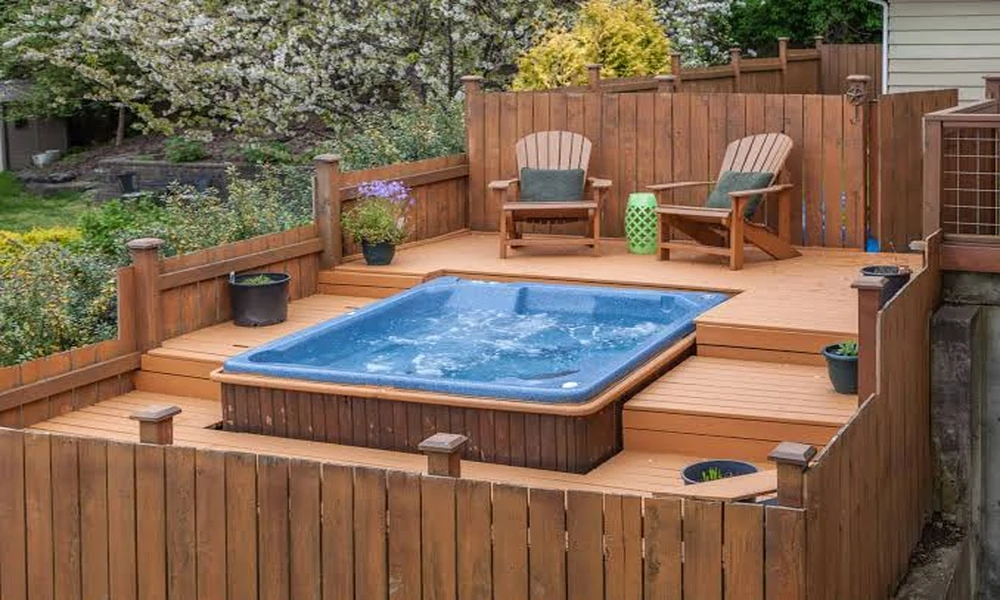
- Pick the pad. A reinforced concrete pad handles most tubs. A raised deck needs a structural check, since a filled tub plus people can weigh well over a ton.
- Trace the electrical path. Most full-size tubs want a dedicated 240 volt circuit run by a licensed electrician. Distance from the panel changes the quote, sometimes dramatically.
- Check access for delivery. A six-foot gate is a problem. Measure every turn, gate, and stair between the street and the spot before you buy.
- Sight your sightlines. Privacy matters, and so does your view. Nobody wants to stare at a fence while soaking.
- Confirm local rules. Some HOAs and municipalities ask for fencing, covers, or setback distances around water features.
If you skip step three, you’ll be the person calling a crane company. It happens more than dealers advertise. The good news is a quick measuring tape walkthrough saves you the whole headache.
Do you need a portable tub or a swim spa?
Most buyers assume portable hot tubs are the only option under a certain budget, and swim spas are a luxury add-on. That’s backwards for some households. If your family wants exercise and soaking in one footprint, a swim spa can replace two purchases, and the math starts to look different.
Portable tubs, meaning the plug-and-play and mid-size models, suit couples and small families who mostly want to unwind after work. They’re easier to move, cheaper to run, and simpler to place. Swim spas suit households with swimmers, people recovering from a long day on their feet, or anyone with a long narrow yard where a pool won’t fit.
My honest take: if you’re buying for two people and a glass of wine in the evening, buy the smaller tub and put the savings into a better cover and a proper pad. You’ll use it more and regret less.
The four-buyer sorting framework
Before you compare models, figure out which buyer you are. This is the framework I use, and it works because it forces you to name your real use case instead of shopping by features.
| Buyer type | What they actually want | Where to spend |
|---|---|---|
| The Evening Soaker | Quiet, warm, simple | Insulation and a good cover |
| The Family Hub | Seating for four or more | Layout and lounger placement |
| The Mover | Low running cost, easy care | Pump efficiency and filtration |
| The Fitness Buyer | Current for swimming | Shell size and jet configuration |
Notice that brand never appears in that table. It shouldn’t. Brand matters, but it matters after you know which row you’re in. Buyers who shop brand first tend to overpay for features they never touch.
Running costs, without the guesswork
Nobody can quote your exact monthly bill, and anyone who claims to is guessing. What you can do is compare efficiency ratings and buy accordingly. The ENERGY STAR program is a reasonable starting point for understanding how appliances are rated for efficiency, and a well-insulated tub with a fitted cover will always outperform a bargain model with thin walls.
Warm water plus a loose cover equals money leaving your bank account every month. Ask the dealer for the cover’s foam thickness and the cabinet’s insulation spec. If either answer is vague, treat that as your answer.
What to ask before you sign
Showroom visits go better with a short script. Here’s the list I’d bring.
- What’s the lead time if I want a different shell color?
- Who handles warranty service, and how far do they travel?
- What’s the real cost of a first-year water care routine?
- Can I see the tub filled and running before I commit?
- What happens to the old tub if I’m replacing one?
That last question gets skipped constantly. Removal and disposal is real labor, and whether it’s included changes the true price.
One last thing about buying local
North Carolina’s population has grown quickly over the past couple of decades, according to Census Bureau data, and that growth shows up in how fast new neighborhoods fill in. More neighbors means more fences, more decks, and more shared sightlines. Buying from a dealer with a physical location in the state means warranty service happens in person, not over a phone tree with a company three time zones away.
That’s the whole case, really. A tub is a fifteen-year purchase for a lot of households. You want someone who can drive to your house.
Closing the loop
Sort yourself into a buyer type, walk your yard with a tape measure, and settle the electrical question before you fall in love with a model. Do those three things and the rest of the process gets shorter and cheaper. Which row of that table are you, honestly?
