

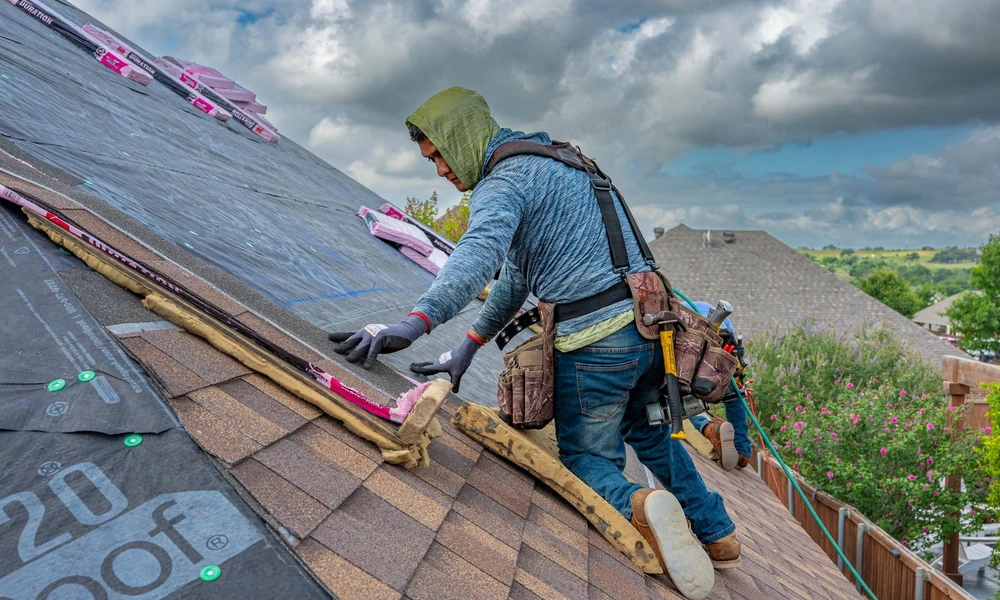
Most homeowners spend weeks choosing a roofer and about five minutes preparing for the job. That’s understandable, since the crew does the work. But a roof replacement is a loud, dusty, busy event that takes over your property for a day or more, and a little preparation makes it smoother for everyone. Experienced crews tend to have the same short list of things they’d like homeowners to know. Here it is, in the order they come up.
Clear a path
Roofers need room, and the first thing they need is access. A roof replacement usually involves a dump trailer or dumpster, a delivery of shingles and materials, ladders, and a lot of foot traffic. Move your vehicles off the driveway and away from the front of the house the night before, and ask neighbors to do the same if they park nearby.
Clear the area around the foundation too. Push back patio furniture, grills, planters, and children’s toys, because shingles, nails, and old materials will fall in places you didn’t expect. Trim back shrubs and low branches near the walls, since crews need space to set up ladders and to throw debris into the container. If you have a gate, make sure it’s unlocked and that the crew knows how to reach the work area.
Ask for a written prep list
Every company handles things a little differently, so don’t rely on guesswork. When you’re comparing proposals, ask your roofing company in Tomball for a written list of what you should do before the crew arrives and what the crew will handle. Any reputable roofer should be willing to walk you through scheduling, crew size, expected duration, and weather plans.
Also ask how delays are handled. Rain or wind can push a job back, and a good contractor will explain how they protect an open roof overnight, with tarps or temporary covering, if the work spans more than a day.
Protect the attic and the walls
Tearing off an old roof shakes the whole house. Dust, grit, and bits of old insulation sift down through the attic, and the vibration from hammering can knock framed pictures off the walls and loosen items on shelves. Take down wall hangings, especially on the upper floor, and move fragile items away from the ceilings. If you store belongings in the attic, cover them with sheeting or move them out.
It’s also a good idea to vacuum or cover the top of your garage storage, since many garages share a roofline with the house. Vehicles parked inside are generally fine, but covering shelving and workbenches saves a cleanup later.
Plan around the noise and the people
Roofing is noisy, and it starts early. If someone in your home works from a quiet room, sleeps in the day, or has a newborn or a pet who gets anxious, plan for them to be elsewhere. Pets in particular are better off away from the property, since open doors, ladders, and loud hammering can frighten them or let them wander off.
Tell your neighbors about the job ahead of time. A short heads up about noise, parking, and dust is a small courtesy that avoids complaints.
Know what happens to the debris
Old shingles, torn underlayment, and nails go somewhere, and it’s worth knowing where. Most crews use magnetic sweepers to pick up stray nails from the yard and driveway, but ask if that’s part of the job and how they protect landscaping and the pool area. Cover pool equipment if it’s close to the work, and ask whether the crew will tarp plants or lay boards along the beds.
Check the proposal for cleanup. A good scope states that the crew removes all debris, hauls it away, and leaves the property clean.
Get the paperwork straight
Before work starts, you want the agreement in writing. The Texas Law Help guide to hiring a contractor, adapted from material by the Federal Trade Commission and the Texas Attorney General, says to ask for a written agreement and a written estimate that includes the description of the work, materials, completion date, and price. It also notes that if a homestead improvement exceeds $5,000, Texas law requires the contractor to deposit your payments in a construction account at a financial institution, and it suggests asking for written verification that the account exists.
Keep copies of the contract, the product specifications, and any correspondence. After the job, ask for the manufacturer and workmanship warranty paperwork, and keep it where you’ll find it in ten years.
The walk through at the end
When the crew finishes, don’t just wave and go inside. Walk the property with the crew leader, if possible. Look at the roof from the ground, the ridge line, the flashing, and the gutters. Check the yard for nails and debris, and look at the siding, windows, and landscaping for damage. If something isn’t right, mention it that day, and take photos.
Then follow up inside. Look in the attic for daylight or damp spots during the next rain, and check the ceilings in the rooms below. Any problem in the first few weeks is easier to fix when the crew is still fresh on the job.
A little preparation goes a long way
A good roof replacement isn’t a mystery. It’s a few days of controlled chaos that goes much better when the house is ready and everyone knows the plan. Clear the access, protect what’s inside, tell the neighbors, understand the payment and paperwork, and walk the finished job. Do those things and the crew can focus on the part you hired them for, which is putting a roof over your head that you won’t have to think about for a long time.
